
Soup
On cooking and writing. But mostly on soup.
For some reason, my official bios often end “…and she makes good soup.” I don’t know why. But it’s true, I do make good soup. I am often asked about it, and since it’s January, the time of soup in my hemisphere, this seemed a warm, cozy, nutritive way to begin the year.
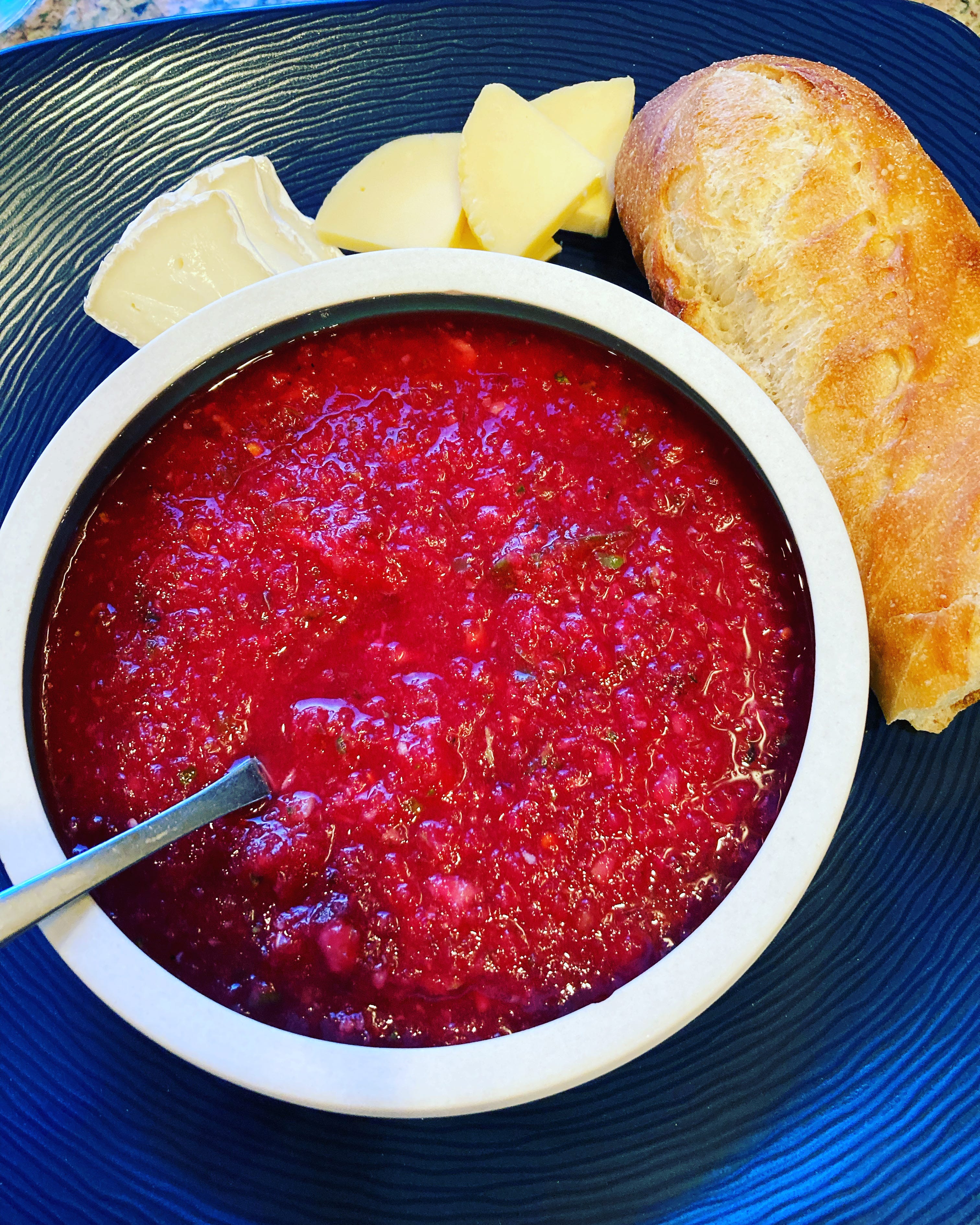
Because I make soup and because I write books, people often suggest I should write a cookbook. I should not, for lots of reasons, but one is definitely this: You don’t need a recipe to make soup. You don’t need any particular ingredients — anything in your fridge, freezer, or cupboard can go in. You don’t need a plan or special equipment or any real skill. Here’s what you need:
An onion
48 hours
That’s it. Freeing, no? The short list of musts is part of both the appeal and magic of soup. There’s so much cooking — and nearly all baking — that does require strict adherence to sometimes dozens of step-by-step instructions, the exact procurement of myriad ingredients, the purchase and use of all sorts of narrowly circumscribed equipment. Whereas if you want soup, you need to chop an onion1, sauté till translucent in a little bit of fat2, and then add whatever else you wish or have on hand.
This last bit is the best part. Anything you like, you can use. Anything you don’t, you needn’t. Myself, I mostly make goal-oriented soups, that goal being to feed and nourish my family as easily as possible, which is to say soups with lots of beans (for protein3 and fiber) and lots of vegetables (for vitamins and nutrients). If your soup lacks these things, it’ll taste great, but you still have to also make dinner. If your soup is a complete meal, you can make a big pot on Sunday and then take several weeknights off cooking altogether.
Some advice on this front:
Lentils are full of protein and fiber and cook right in the soup. Also split peas.
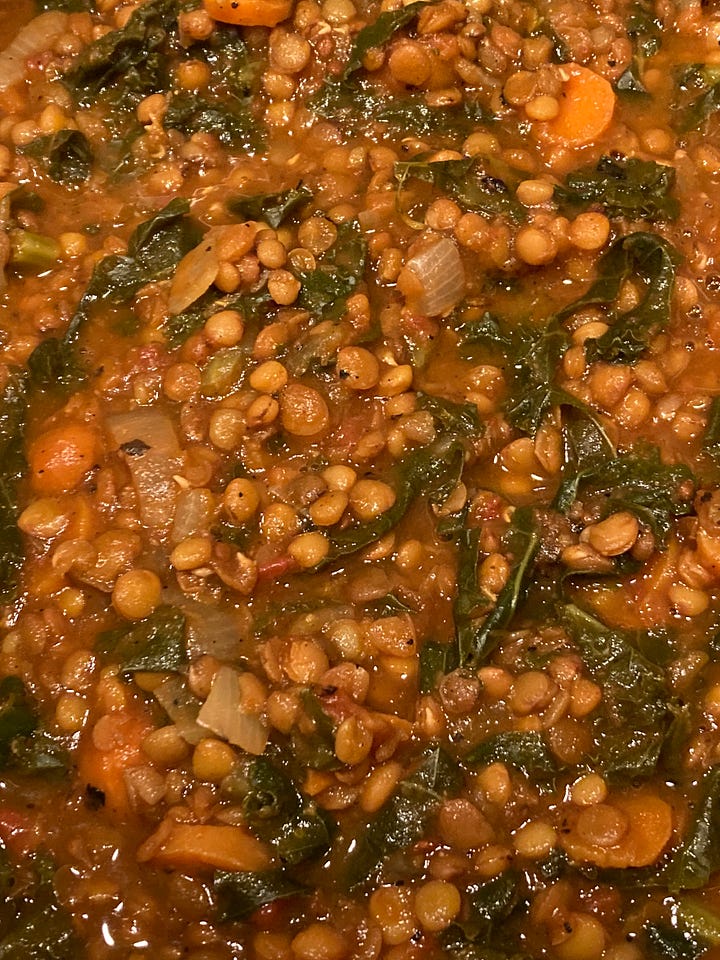
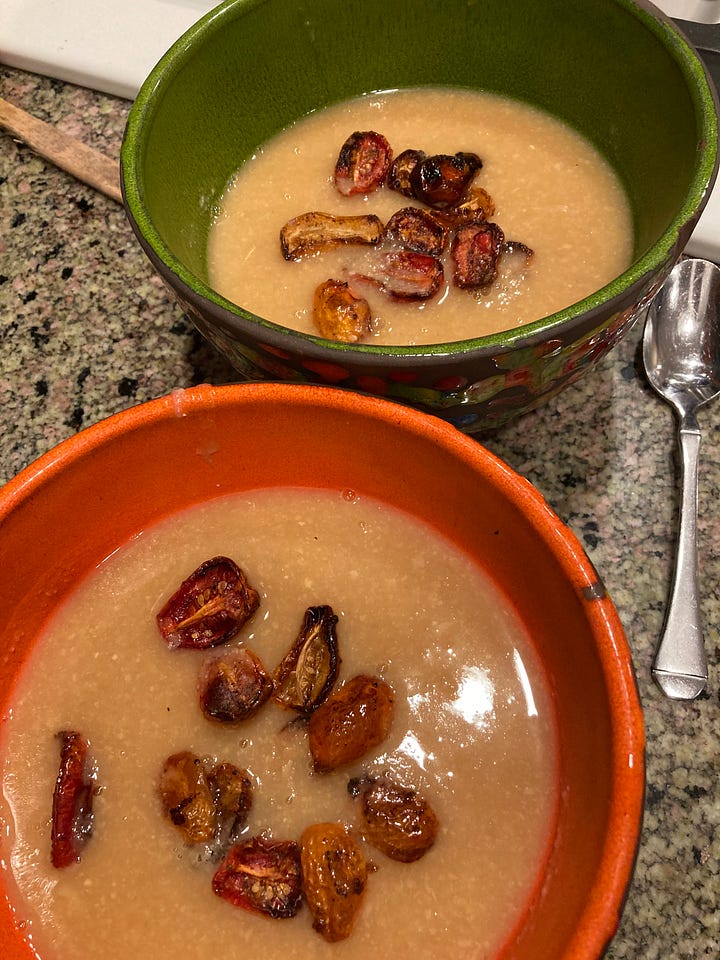
Lentil soup (my most made soup by far) and split pea (beautified with roasted tomatoes) Other beans are also full of protein and fiber but won’t cook easily in your soup so usually go in pre-cooked. Canned beans are great for this. Instant pot4 beans are even better, easier, and will change your life.
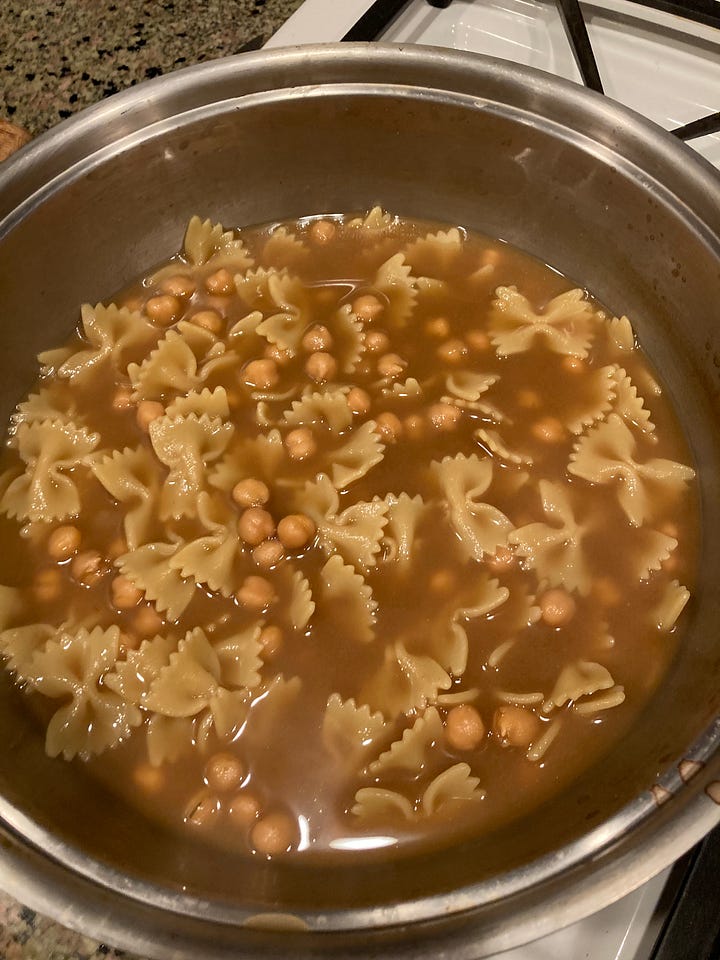
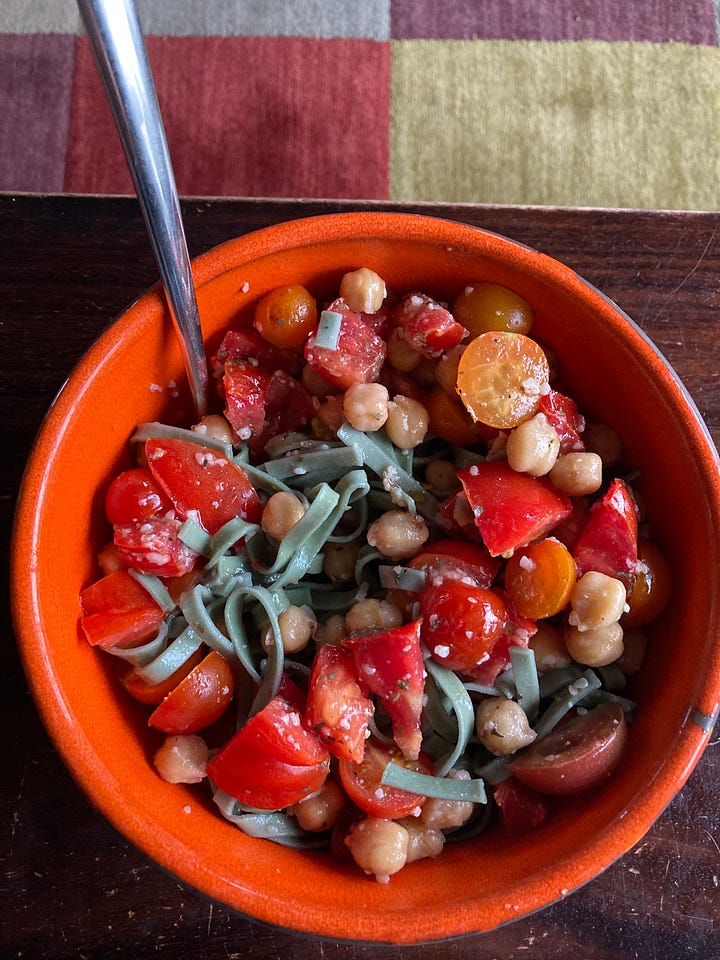
TBH, when I say "other beans," I almost always mean chickpeas. A head of cauliflower — including leaves and stems — makes a nice curry5.
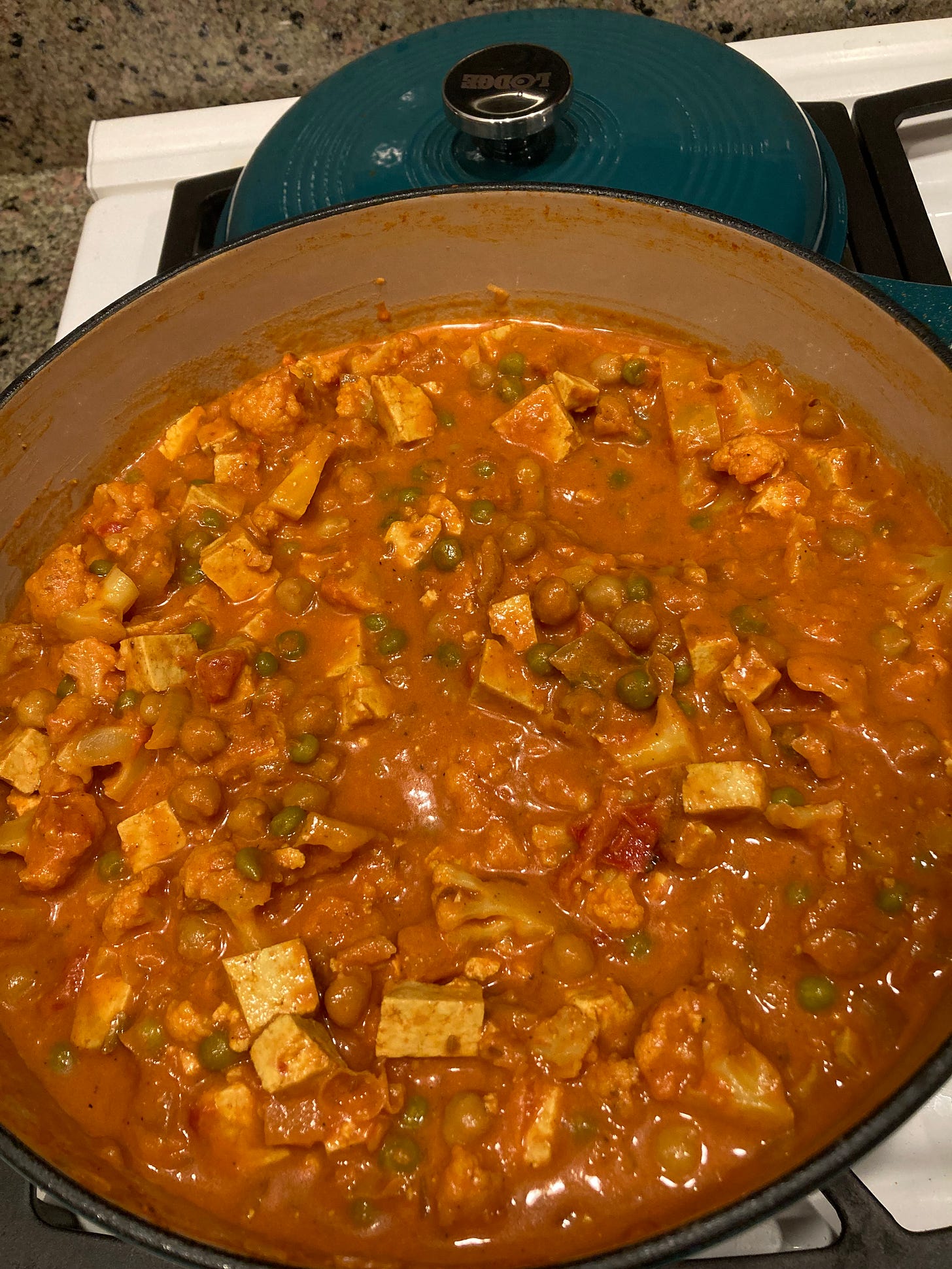
My niece is a chef AND my secret santa and got me this gorgeous dutch oven for xmas in this gorgeous color. It is large and heavy and my husband wondered where we would store it. Turns out not to be a problem because it’s not yet been out of use. Plus is pretty enough to live on the stove. Celery is bullshit, and you can feel free never to add it. Yes I know your soup recipes all call for it. Yes I see your mirepoix and your soffritto. I said what I said.
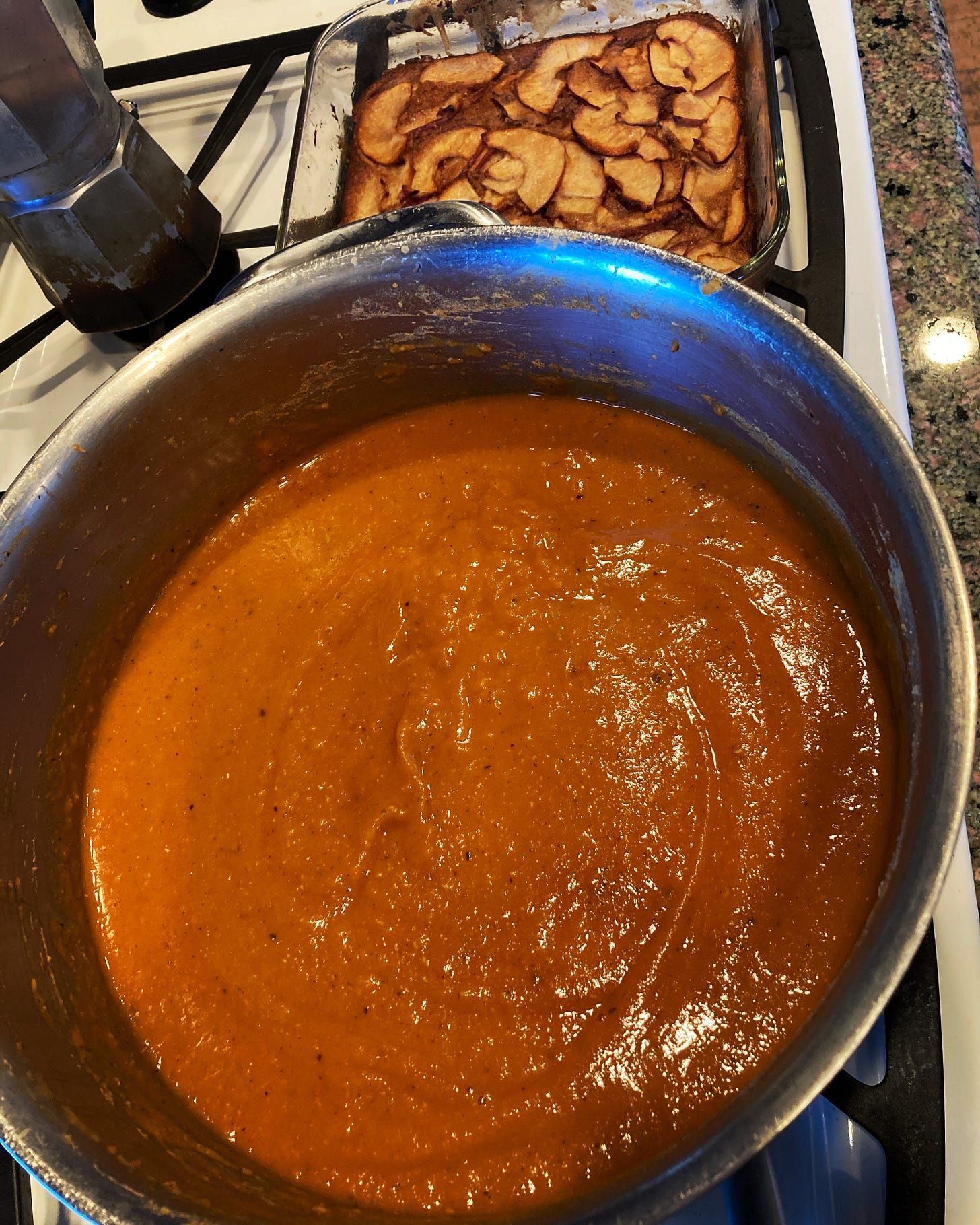
Red lentil carrot soup. Does this look like it’s suffering from lack of celery? Buy fresh bags of kale and freeze them. This way you always have kale — the world’s healthiest substance — on hand to add to your soup. Better still, once frozen, you can dice it just by squeezing the bag. Could. Not. Be. Easier.6
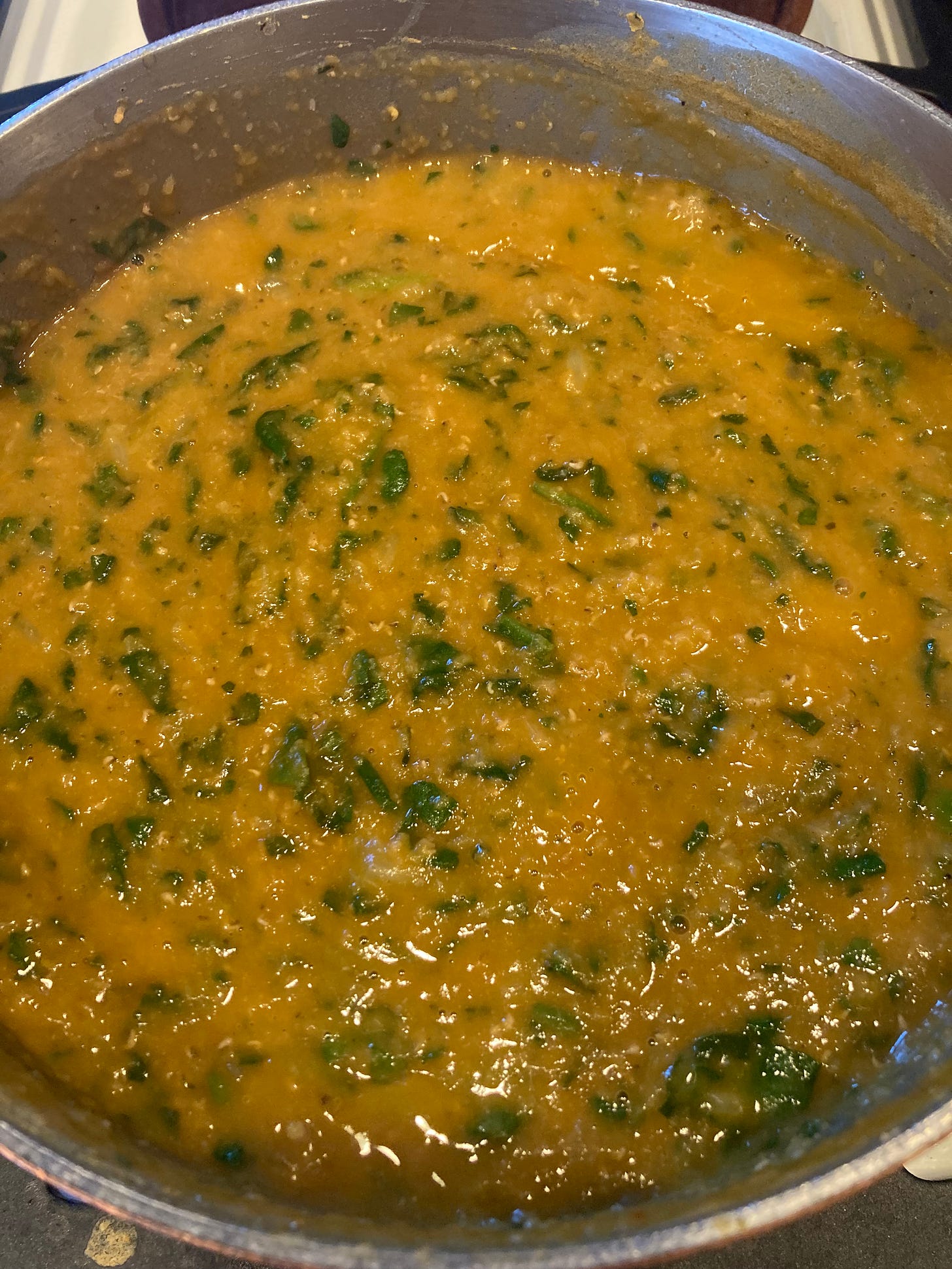
If you wanted, you could stomp or even sit on the bag and achieve the same chopped kale effect.


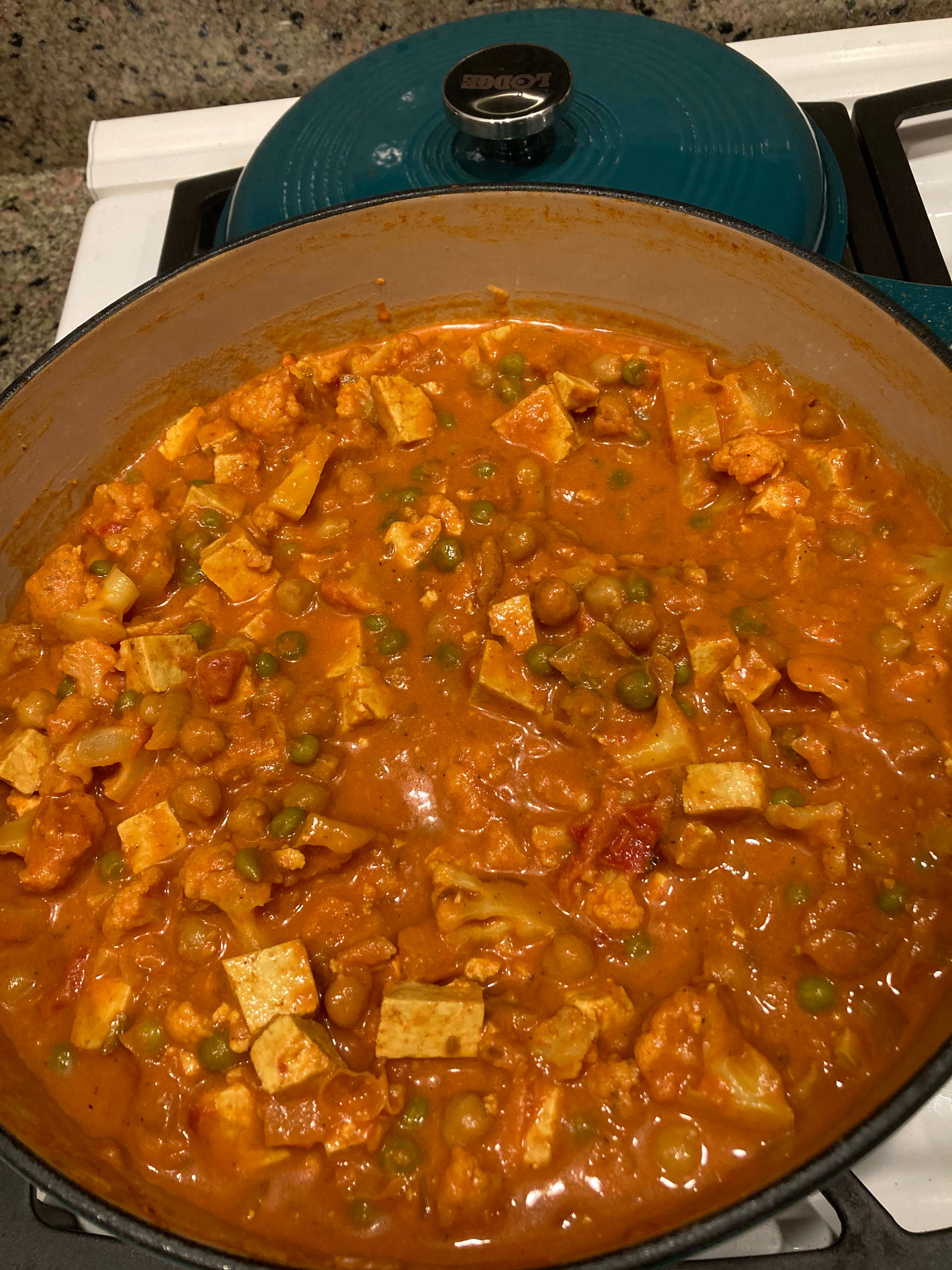
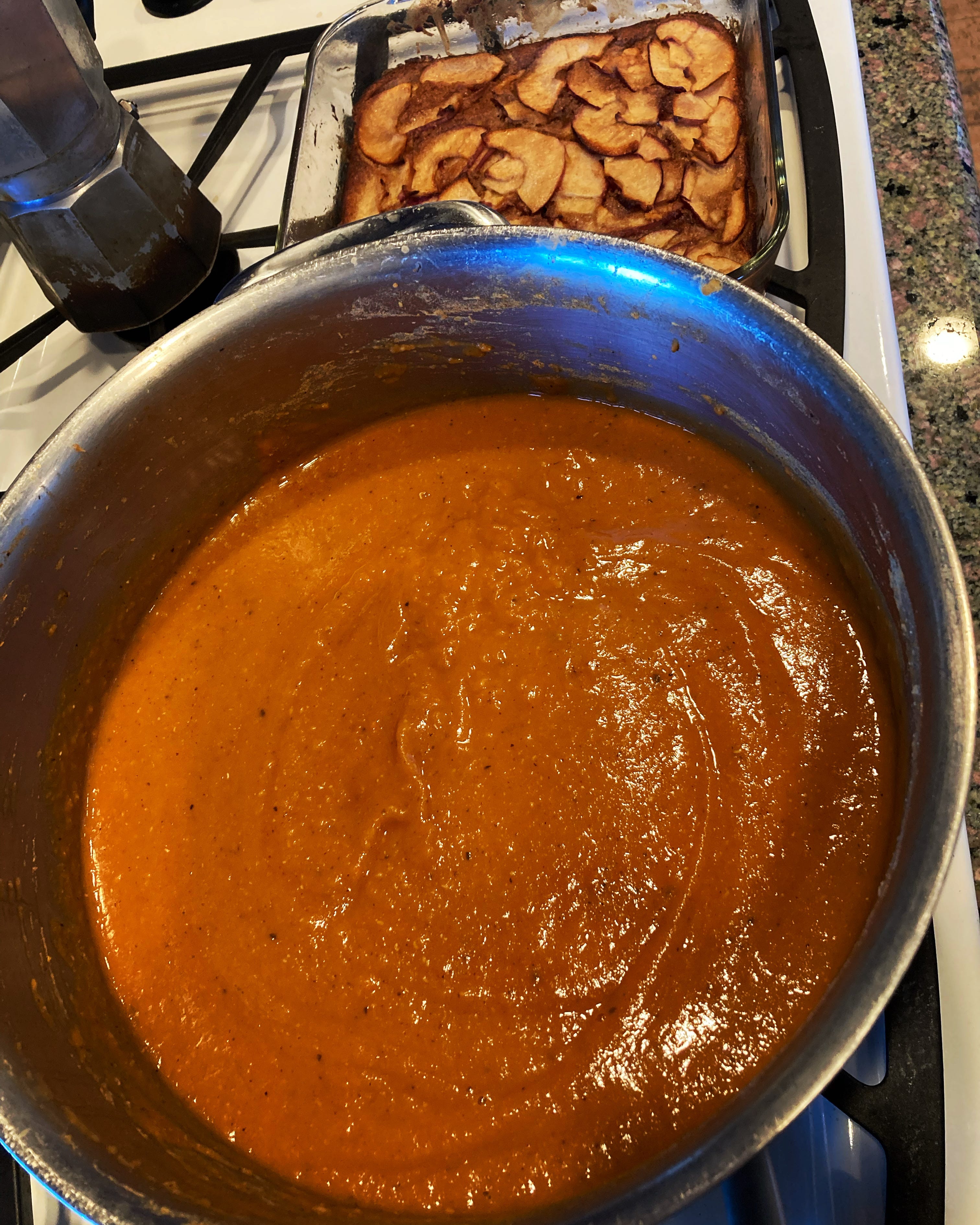
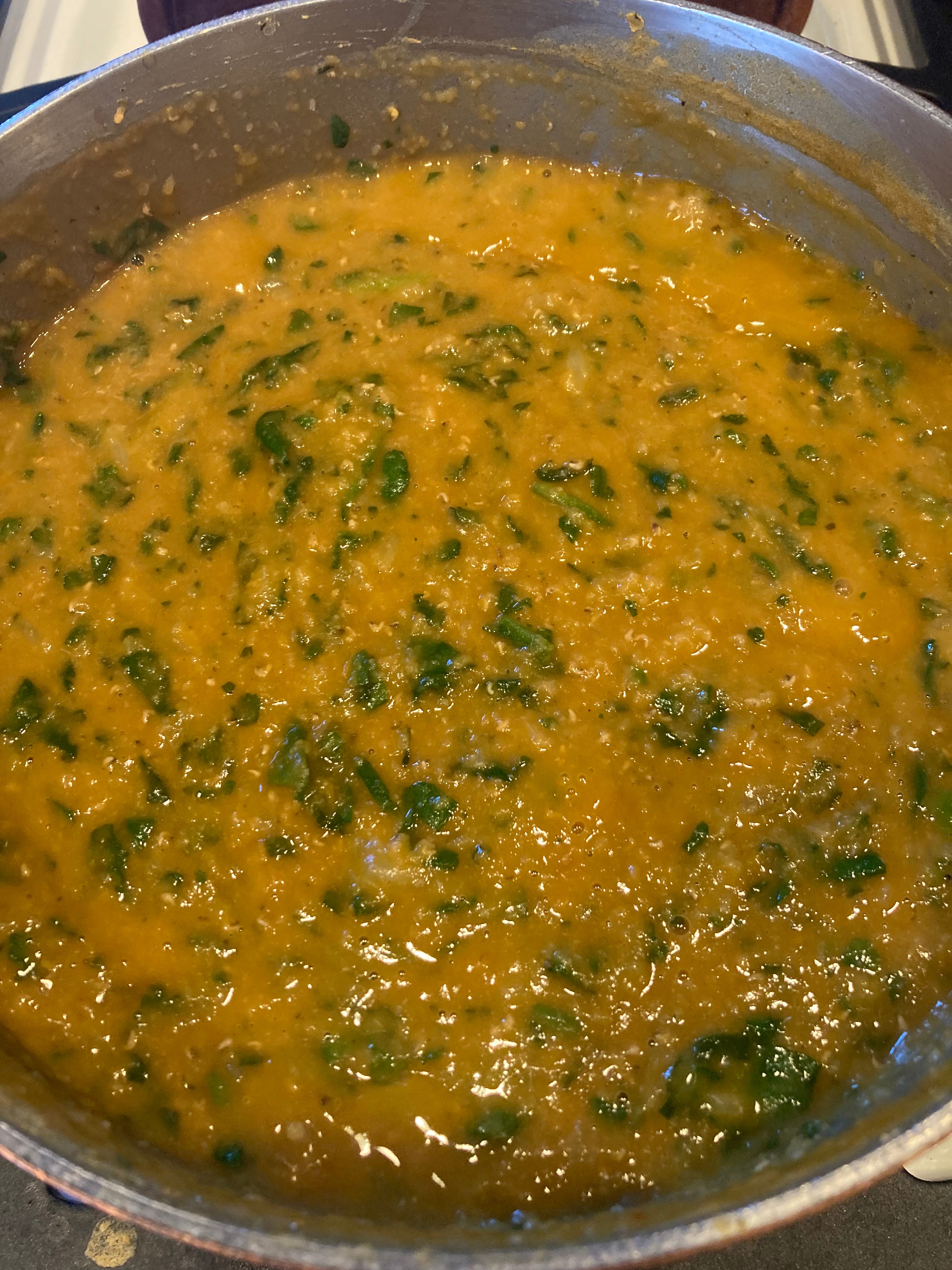
Sometimes your goal is to use up what’s in your fridge or CSA box. Sometimes your goal is to sneak vegetables into children. Sometimes it’s to feel warm and full and comforted. Soup is great for all of that. The trick is to throw things in the pot until it tastes good. If it does not, it’s usually not because your soup isn’t good but because it isn’t good yet. You’re not done. You need to do more. Usually it’s add salt7, some kind of acid8, some kind of heat9, or more liquid10. You add a little, taste a little, simmer a little, add a little, and then wait.
While we wait, let me add that all of this is also how you write a novel. At least, it is also how I write a novel. I need no special equipment. I have no recipe or plan. There are no steps to follow carefully in order. I throw a bunch of stuff in the pot, taste it, determine it’s terrible, then adjust and adjust and adjust and adjust until it’s good. There are people who make novels like they make cakes with fully detailed plans laid entirely out before they start, and I would if I could. But since I can’t, let me assure you that the recipe-free, throw-stuff-in-a-pot-and-adjust-till-it-doesn’t-suck approach also works. The kitchen is a disaster after, but nobody minds if the final product tastes great. Often, in-progress writers think their novels are not good when really their novels are not good yet. With more simmering, more salt, more heat, more work and time, they would be. The trick is not to stop before you’re done.
As to the waiting part (of both), that’s where the magic happens. If you make soup and think it’s just meh, it’s probably because you ate it the same day. Soups get better the longer they sit. In my household, we never ever eat soup I didn’t make at least two days earlier, and three or more is better. The deal with soup is this: You’ve done a perfectly adequate job when it goes in the fridge, but when it comes out two days later, you get to add “…and she makes good soup” to your bio.
Know what else is great about soup? While it simmers and needs to be stirred every so often, you get to stand in your kitchen and read a book! Can you say this about baking a cake? I think not. But even just mentioning cakes makes me think of this book cover11 and this book, both delightful:

The English Understand Wool is a novella, so you can (and are meant to) read it in a sitting (or a standing, depending on how long your soup needs to simmer12). It is not about cake. It is about storytelling and publishing and coming of age and snobbery and elitism, and it is smart, funny, delightful, and entirely bite-sized.
Wishing all of you all of the above for the year ahead — wisdom, amusement, delight, cake, instant gratification, good things to read, and warmth, comfort, and joy. Here’s to 2026. May this new year have more peace and love than the one behind.
Any kind
Any kind
You can use meat for this, but we are veg, so I can’t advise.
While waiting for our girls to finish up in a thrift shop, a dear friend of mine convinced me that the hype surrounding instant pot mac and cheese was maybe stupid — how hard is it to make mac and cheese? — but the way it makes beans is life changing. She was right. Best $19.99 I ever spent.
Is curry a soup? For the purposes of this conversation, it is.
Freezing fresh works nicely for all sorts of greens. Frozen spinach sucks. Frozen fresh spinach is great. I have no idea why, but I do eat it for breakfast most mornings when it’s not blueberry season.
Or salty: cheese, miso, bouillon, soy or worcestershire sauce. Marmite if that’s your jam.
Vinegars, lemon juice, lime
Pepper, chili, hot sauce
Water, broth, something creamy, the juice from the chickpeas you instapotted
Painting is Boston Cremes by Wayne Thiebaud, 1962. Is the Boston Creme a cake or a pie? I think we say “pie,” but these definitely look like cakes to me. Neither have anything to do with the story. Let this be a lesson in not judging a book by its cover, about which more in a future missive.
Usually approximately three times as long as your recipe says
If I can't have a new book of yours every few weeks, I will gladly take butt + chair. Fantastic writing with humor in little, delicious bites. Thank you!
I always love your footnotes. Also, thank you for your bold assertion that celery is a trash vegetable. I am right there with you.